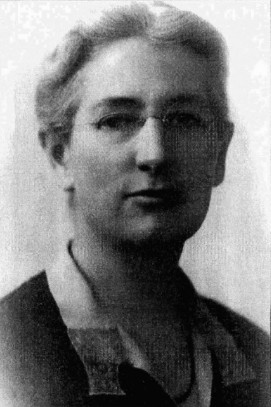
 Dr. Martha Greene Tracy (April 10, 1876 – March 22, 1942) was a pioneering physician, cancer researcher, public health advocate, and educator who served
for over two decades as the dean of the Woman's Medical College of Pennsylvania.
Dr. Martha Greene Tracy (April 10, 1876 – March 22, 1942) was a pioneering physician, cancer researcher, public health advocate, and educator who served
for over two decades as the dean of the Woman's Medical College of Pennsylvania.Partner Ellen Culver Potter
Queer Places:
Woman’s Medical College of Pennsylvania, 627 Arch St, Philadelphia, PA 19106, USA
Bryn Mawr College (Seven Sisters), 101 N Merion Ave, Bryn Mawr, PA 19010
Cornell University (Ivy League), 410 Thurston Ave, Ithaca, NY 14850
Yale University (Ivy League), 38 Hillhouse Ave, New Haven, CT 06520
University of Pennsylvania (Ivy League), 3355 Woodland Walk, Philadelphia, PA 19104
Hillside Cemetery, 1401 Woodland Ave, Scotch Plains, NJ 07076, United States
Dr. Martha Greene Tracy (April 10, 1876 – March 22, 1942) was a pioneering physician, cancer researcher, public health advocate, and educator who served
for over two decades as the dean of the Woman's Medical College of Pennsylvania.
Born in Plainfield, New Jersey, to first cousins Martha Sherman Greene and Jeremiah Evarts Tracy, she descended from a distinguished line that included Founding Father Roger Sherman and Senator William Maxwell Evarts. She completed her early education at the Plainfield Seminary for Young Ladies and Children before attending Bryn Mawr College, where she captained the basketball team, presided over the College Athletic Association, and earned her Bachelor of Arts in 1898. Tracy then enrolled at the Woman's Medical College of Pennsylvania, graduating with her medical degree in 1904.
Immediately following her medical training, Tracy embarked on a research career at Cornell Medical College in New York. Working alongside Dr. William Coley, she developed a standardized method for preparing "Coley’s Fluid," an early form of cancer immunotherapy that utilized killed bacteria to stimulate an immune response against sarcomas. Her meticulous laboratory work earned her widespread recognition, and in 1908, she became the first female member of the American Association for Cancer Research. Despite the promise of a lucrative research career, Tracy returned to her alma mater in 1907 as an associate professor of chemistry, continuing independent oncology research with support from the Huntingdon Fund. To broaden her scientific foundation, she took a leave of absence from 1911 to 1913 to study physiological chemistry at Yale University, returning to the Woman's Medical College of Pennsylvania as a full professor. She simultaneously pursued advanced studies in public health at the University of Pennsylvania, earning a Doctorate in Public Hygiene in 1917.
In 1917, Tracy was appointed the seventh dean of the Woman's Medical College of Pennsylvania, a role she held until 1940. Under her leadership, the institution navigated severe financial hardship, including the challenges of the Great Depression. She established a four-year curriculum in preventive medicine, built a comprehensive department of social medicine, and opened the Anna Howard Shaw Health Service for Women in 1932 to provide affordable care. Between 1925 and 1930, she spearheaded a major fundraising campaign that secured $1.5 million to build a modern hospital and campus in East Falls, Philadelphia. Tracy served as president of the American Medical Women's Association from 1920 to 1921, became a Fellow of the American College of Physicians in 1923, and in 1934 became only the second woman physician elected a Fellow of the College of Physicians of Philadelphia. In 1940, as she approached mandatory retirement at the college, Tracy transitioned to municipal governance as the Assistant Director of Health for the City of Philadelphia. Following the attack on Pearl Harbor in late 1941, she led the organization of citywide Civilian Defense Squads. After contracting a severe chill while working on wartime emergency preparedness, she died of pneumonia on March 22, 1942, and was interred at Hillside Cemetery in Plainfield, New Jersey.
Beyond her formal appointments, Tracy’s personal life reflected a common social pattern among pioneering female physicians of her era. For decades, Tracy shared her life and work with Dr. Ellen Culver Potter, a physician, professor, and public health pioneer who served as Secretary of Welfare for Pennsylvania. The two women met at the Woman's Medical College of Pennsylvania at the turn of the twentieth century and remained inseparable domestic and professional partners until Tracy’s death. Together, they lived in a shared household, managed their medical careers on parallel tracks, and spent their summers running a 370-acre retreat camp in the Adirondacks. Like many contemporary partnerships between professional women, Tracy and Potter built a self-contained, female-centered world that bypassed traditional heterosexual marriage models. This lived experience created a stark cultural divide between their generation of professional women and the post-World War I rise of suburban domesticity. While Tracy and Potter sought to encourage women's participation in higher education and medicine, they often struggled to reconcile their own independent domestic arrangements with the societal expectations placed upon married women of the 1920s and 1930s.
References:
Other references:
Support this project
This website is a passion project researched, developed, and funded entirely by me. If you find the content valuable and would like to help support the ongoing research and hosting costs, any contribution is deeply appreciated.
Thank you for keeping this independent resource alive!
My books on Amazon: Elisa Rolle's books

